Dive knives seem like one of those accessories that you really don't need but just look cool wearing....until you get caught in a situation when you need one. Then they become invaluable. We recommend that every diver always wears some sort of knife on their person when diving to deal with such things as entanglement in kelp, fishing line, rope, etc. or use it to wrap on your tank to get your buddy's attention. There are dozens of possible uses for this versatile tool.
Purchasing a dive knife can get a bit overwhelming, however. Store shelves can be lined with different sizes, shapes, materials, colors and the list goes on. We are going to weed through all of that and explain some of these differences so you can choose your perfect dive knife!
Types and features of dive knives:
 Knife Size
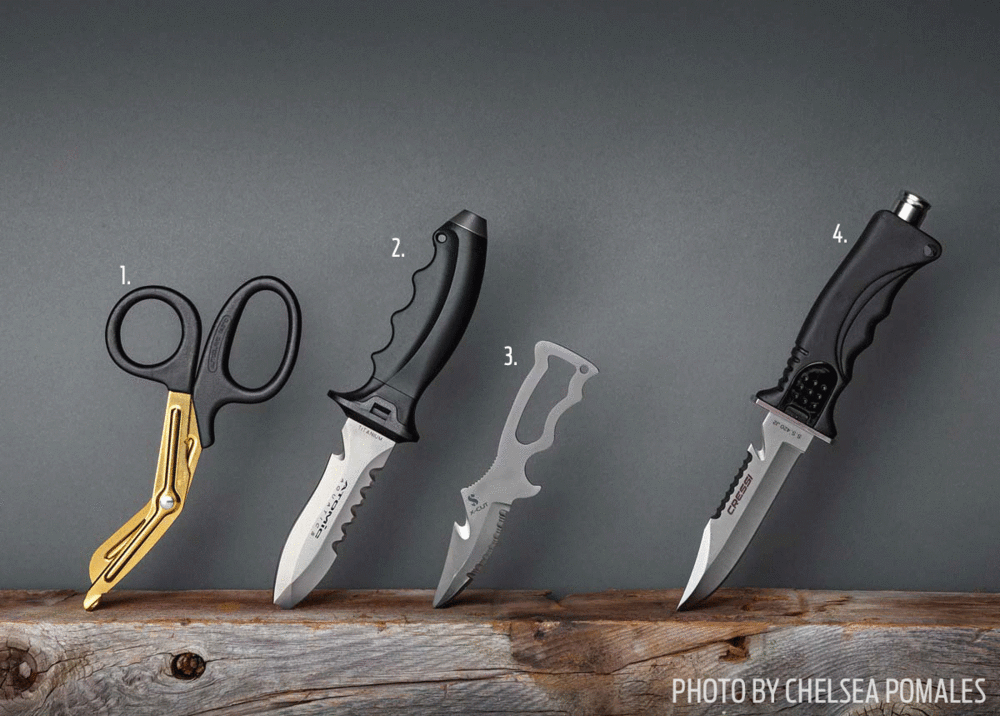
Dive knives usually fall into three size categories: large, medium (or pocket sized), and small (or compact). Large dive knives are usually the ones you see divers wearing strapped to their legs so they can look really cool. Unless you are an underwater hunter (of which these large knives can come in handy) there really is no reason to splurge on a large knife. Most knives fall into the medium-size category, and the small ones are easy to carry around for those "just-in-case" moments. It really all comes down to what size knife you are most comfortable handling.
 Knife Placement

Dive knives can be worn in any number of configurations. The most popular ways are strapped to your leg, attached to your BC, or hooked onto your inflator hose. Usually, if you are wanting a larger knife, you will wear it strapped to the outside of your shin or thigh. Medium sized knives (probably the most popular) will be worn on the side of a BC pocket. Most modern BCD's come pre-made with grommet-lined holes in the side of the BC where you can screw a knife on horizontally. This is an easy and convenient place to keep a dive knife. Lastly, smaller sized knives and line cutters can be velcroed around the inflator hose for easy access.
 Knife Material

This is an important one to consider. There are basically two types of materials you will see knife blades made from: titanium or stainless steel. Titanium equals no rust. You can be more lax on caring for a titanium knife as it will not rust like a stainless steel knife can. Titanium is stronger and much lighter weight, however, is more expensive than stainless steel knives. Stainless steel needs to be cared for and rinsed off more thoroughly than titanium, but is a harder metal, meaning it will stay sharper longer. They are also heavier. It basically comes down to how much you want to spend on your knife. Also, pay attention to what the handle is made out of. You may want a knife with extra grip so it is easier to handle underwater.
 Other Alternate Tools To Consider

If you want something a little less intimidating and easier to handle than a knife, there are now some great options for you! Since most knives are used to cut fishing line you can just get what is called a "line cutter" tool. This is usually rectangular shaped with a notch in it that has a sharp blade to easily slice the line. Another option is just a pair of dive sheers. These are basically underwater scissors that are sharp enough to cut through monofilament line.
The best way to choose your dive knife is to handle a variety of them in person to see what weight, shape, and style you like best. We carry a wide variety of dive knives here at Underseas Scuba Center, so come on in and try them for yourself!